• Skip to content
  • Skip to primary sidebar

The Knobbly Plate

A veggie, foodie, photography site

British

Wild Garlic and Nettle Pakoras

May 18, 2025 by knobbyplate


In the dappled light of early spring, the forest floor comes alive with the vibrant green of new life. Among the soft carpets of moss and leaf-littered paths, young nettles rise—tender and vivid, their sting still fierce but their flavour at its peak. Nearby, the last of the wild garlic lingers, its long, elegant leaves tapering like whispers of the season that’s beginning to turn. The air hums gently with the earthy scent of wet soil and the faint garlicky aroma that signals this forager’s treasure.

Gathering nettles requires care—gloves to ward off their sting and a patient hand to pluck the topmost, youngest leaves. These are the softest, full of the green vigour that makes them perfect for cooking. The wild garlic, growing in shaded clusters, is just starting to fade, its leaves broad and deep green, carrying that unmistakable pungency. Together, they form a wild, seasonal pairing that captures the very essence of spring’s fleeting energy.

Back in the kitchen, these humble greens are transformed into an Indian-inspired snack that bursts with flavour and texture—pakoras. The nettles are quickly blanched, taming their sting while preserving their earthy, mineral-rich taste. The wild garlic is chopped finely, lending its bold notes to the mix. Into a bowl they go, combined with gram flour, chopped onions, green chilli, cumin seeds, and a scattering of fresh coriander. A touch of turmeric gives the batter a golden hue, while a squeeze of lemon lifts the flavours.

The mixture, thick and spoonable, is dropped into hot oil, sizzling into crisp, craggy fritters. Each pakora emerges with a delicate crunch, the inside steaming and soft, the greens melting into every bite. The nettles bring a grassy depth, while the wild garlic infuses the fritters with warmth and pungency.

Served with a cooling mint yogurt or tangy tamarind chutney, these pakoras are more than a snack—they are a celebration of the land’s first gifts, a nod to traditional Indian flavours, and a moment of culinary alchemy. Foraged with care and cooked with intention, they embody the spirit of spring: fresh, fleeting, and absolutely unforgettable.

Save Print
Wild Garlic and Nettle Pakoras
Author: Tony Tomlinson
Recipe type: Foraged
Cuisine: British
Prep time:  15 mins
Cook time:  5 mins
Total time:  20 mins
Serves: 20-25
 
Ingredients
  • 260 g chickpea flour (gram flour)
  • 2 tsp sesame seeds
  • 1 tsp turmeric
  • 1 tsp red chilli powder
  • 1 large pinch of asafoetida
  • 1 large pinch of baking powder
  • 1 tsp sea salt
  • 2 tsp cumin seeds, ground
  • 2 tsp coriander seeds, ground
  • 1-2 green chillies Handful three-cornered leek (or wild garlic)
  • 100 g nettle tops
  • 250 ml water
  • 500-1000 ml vegetable oil
Instructions
  1. In a large mixing bowl, combine the chickpea flour, sesame seeds, turmeric, chilli powder, asafoetida, baking powder and salt.
  2. Freshly grind the cumin and coriander seeds and add to the mix.
  3. Finely chop and deseed the green chillies and add in, combining well.
  4. Next, wash and chop the three cornered leek and stir in.
  5. Wash and roughly chop the nettles; use wooden spoons to move them around and cut with scissors.
  6. Gradually add two thirds of the water. Allow the mixture to rest. Check the consistency, you’re wanting a wet batter, though not watery. Add the rest of the water if necessary.
  7. Prepare a couple of large plates with absorbent paper kitchen towel on (I didn't have any so just placed them on a dry plate).
  8. Heat the oil over a medium to high heat in a large pan or deep fat fryer - I used a wok and turned them to cook both sides.
  9. Test to see if the oil if ready by dropping a small amount of batter into the oil. If the oil is hot enough the mixture will sink to the bottom then float straight to the top again.
  10. Using 2 teaspoons, shape the mixture into firm balls, each about the size of a very heaped teaspoon.
  11. Fry each pakora for 3-5 minutes, turning if needed or until golden brown, remove with a slotted spoon and place on the kitchen towel.
3.5.3251


Filed Under: Foraged, Main Course, Uncategorized, vegan, Vegetables, vegetarian, wild garlic Tagged With: foraged, free food, healthy, indian inspired, nettles, snack, wild garlic

Foraged Sea Beet, Wild Garlic and Mushroom Quiche

May 17, 2025 by knobbyplate

This morning, the air was rich with the scent of salt and new blossoms, as I wandered down to the coastline and through the woods beyond, foraging in the cool hush of late spring. The sun had just begun to warm the earth, casting golden light across the hedgerows and pathways. Wild garlic flourished in shady patches, its white star-like flowers brightening the undergrowth, its scent heady and fresh beneath my fingers. Closer to the sea, the glossy green leaves of sea beet caught the light, clustered like leafy jewels in crevices by the dunes, their briny tang a whisper of the ocean.

The simple joy of gathering food from the wild, each leaf and stem carefully chosen, brought a grounded sense of contentment. I moved slowly, with purpose, breathing in the clean spring air, alive with birdsong and the distant rush of waves. It felt good to be part of the season’s rhythm, attuned to its subtleties.

Back home, the afternoon ripened into gentle warmth. I set about preparing a quiche—something light and earthy to match the day’s quiet beauty. I began by gently sautéing wild mushrooms, their aroma deep and woodsy, like the forest floor after rain. Into the pan went the chopped wild garlic and sea beet, their greens wilting and melding into the mushrooms, creating a filling both vivid and fragrant.

I poured the mixture into a buttery shortcrust base, added a creamy custard of eggs and a touch of cream, seasoned simply with salt, pepper, and a hint of nutmeg. As the quiche baked, the scent filled the kitchen—rich, herbal, and inviting.

By late afternoon, the quiche had cooled slightly, the custard set to a tender wobble, the crust golden and crisp. The first bite was everything I’d hoped for—earthy, garlicky, with a subtle sweetness from the sea beet and the umami depth of the mushrooms. Every mouthful tasted of the morning’s walk, the hush of woodland paths, the hush of tide and wind.

It was a perfect meal for the season—humble, nourishing, and rooted in the beauty of the land. A celebration of spring, shared with the light and birdsong of a fading, beautiful day.

Save Print
Foraged Sea Beet, Wild Garlic and Mushroom Quiche
Author: Tony Tomlinson
Recipe type: British Foraged Vegetarian
Cuisine: British
Prep time:  20 mins
Cook time:  35 mins
Total time:  55 mins
Serves: 6 persons
 
Ingredients
  • For the pastry:
  • * 250 g spelt flour or regular flour
  • * 1 teaspoon sea salt
  • * 1 teaspoon fresh thyme leaves, roughly chopped
  • * 125 g unsalted butter, cold from the fridge, cubed (plus more to grease the quiche form)
  • * 4-5 tablespoons ice-cold water
  • * 1 egg, lightly beaten (for coating the pastry crust)
  • For the filling:
  • * 1 tablespoon olive oil
  • * 2 shallots, finely diced
  • * 75 g cremini mushrooms thinly sliced
  • * 75 g oyster mushrooms, torn into bite sized pieces
  • * Bunch of sea beet (about 50 g)
  • * leaves from two sprigs of thyme
  • * 4 medium eggs
  • * 350 ml milk (whole or unsweetened plant-based such as soy – your choice)
  • * Sea salt and freshly ground pepper, to taste
  • * 150 g Gruyère cheese, grated, plus extra for topping
  • * 1 bunch wild garlic, trimmed and chopped (about 50 g)
Instructions
  1. For the quiche base:
  2. 1. To prepare the dough using a food processor pulse together the flour, salt and thyme until combined. Then add the butter and pulse until you have a rough breadcrumb consistency. Finally, add the water, a little at a time, pulsing, until the mixture forms a dough.
To prepare the dough by hand: in a large mixing bowl, combine the flour salt and thyme. Add the butter and using your fingers, rub into the flour mixture until you have a rough breadcrumb consistency. Add a little water and mix together until mixture forms a dough.
  3. Shape the dough into a disc and wrap in plastic wrap; refrigerate for at least 30 minutes (until firm).
  4. Meanwhile, grease a 24 cm tart pan with removable bottom.
  5. Once the pastry is chilled, roll it out on a floured surface into a large disc (3 mm) that is just wider than the tart pan. Lay the dough over the tart pan and push the pastry into the edges of the pan with your fingers, then transfer it back to the fridge to cool for another 10 minutes.
  6. Meanwhile, heat the oven to 410°F / 210°C (fan-assisted 190°C).
  7. Prick the base of the pastry with a fork, line with baking paper, and fill with pastry weights or dried beans/rice. Bake for 15 minutes, then remove from the oven, and lift out the beans and baking paper.
  8. Brush the pastry with a little beaten egg and return to the oven for 10-15 minutes. Set aside to cool. Note: If the edges of the pastry are overlapping the pan, you can trim them with a sharp knife before you add the filling.
  9. For the quiche filling:
  10. Meanwhile, make the filling. In a large skillet, heat 1 tablespoon olive oil over medium heat, add the shallots and cook for 2-3 minutes, stirring occasionally. Add the mushrooms, increase heat slightly and cook for 7-8 minutes, until softened and lightly browned. Transfer to a plate and set aside to cool.
  11. Break the eggs into a large bowl and beat well. Pour in the milk, add the grated cheese, a good pinch of salt and pepper, and mix to combine.
  12. Once the mushrooms are cool, fold them into the egg mixture, add the wild garlic and sea beet and mix well.
  13. Place the tart pan on a rimmed baking sheet (to catch any run-off or leaks). Pour the filling into the pastry case and spread into an even layer. Finally, top with a generous layer of grated cheese.
  14. Transfer the tart to the already preheated oven and bake for 30-35 minutes, until golden and just set. Remove to a rack and let stand for 10 minutes; remove the sides and the pan, slice and serve. Enjoy served warm or at room temperature.
3.5.3251


Filed Under: Foraged, Main Course, Mushrooms, sea beet, Uncategorized, vegan, Vegetables, vegetarian, wild garlic, wild mushrooms Tagged With: foraged, free food, healthy, healthy eating, quiche, sea beet, vegetarian, wild garlic, wild mushrooms

Fresh Springtime Wild Sorrel Soup

May 7, 2025 by knobbyplate

Wild sorrel, with its arrow-shaped leaves and vibrant green hue, is a forager’s treasure that brings a zesty brightness to any dish. Its flavour is immediately striking—tangy, lemony, and refreshingly tart, like a burst of citrus on the tongue. There’s a crisp, green edge to it, reminiscent of young spinach but laced with a sharper, more vivacious acidity that wakes up the palate. This natural sourness comes from oxalic acid, which gives sorrel its signature bite, not unlike the zest of rhubarb or the tang of green apples.

When cooked into soup, sorrel transforms. The raw leaf’s brightness mellows into a silken, earthy depth, but the lemony undertone remains, lending the dish a gentle sharpness that cuts through creamy bases beautifully. It adds complexity without heaviness—a vibrant note that dances across the taste buds. Imagine the grassy warmth of spring, kissed by a hint of citrus rain. The soup gains an almost velvet-like texture when pureed, while the sorrel’s acidity balances rich ingredients like potatoes, leeks, or a splash of cream.

In this way, sorrel acts both as a bold flavour and a subtle enhancer. It awakens the senses, conjuring images of dew-covered meadows and forest clearings. There’s something wild and ancient in its taste—primal, clean, and invigorating. It’s a reminder that food from the earth can be both nourishing and thrilling, with a taste that sings of nature’s own pantry. Wild sorrel soup, therefore, is more than a dish; it’s a sip of spring’s essence, wrapped in the comforting warmth of a rustic meal. 

Save Print
Fresh Springtime Wild Sorrel Soup
Author: Tony Tomlinson
Recipe type: Foraged
Cuisine: British
Prep time:  15 mins
Cook time:  25 mins
Total time:  40 mins
Serves: 6 persons
 
Ingredients
  • Soup Base
  • 1 small onion or leek (white part), chopped (1/2 cup)
  • 1 Tbs. butter or olive oil
1 small clove garlic, minced
  • 1 medium baking potato or ½ lb. (8 oz.) Yukon gold potatoes, peeled and diced
  • 
3 cups water or broth
  • Sorrel Paste
  • 
4 cups sorrel leaves (3 oz./90 g.), stems trimmed
  • 2 Tbs. (1 oz./30 g.) softened butter or olive oil
Instructions
  1. Sauce the onion or leek in butter or olive oil in a medium saucepan 3 to 4 minutes, or until softened.
  2. Stir in the garlic, then add the potato and water.
  3. Season with salt and pepper.
  4. Cover, and simmer 20 to 25 minutes, or until the potato pieces are very soft.
Meanwhile make the Sorrel Paste.
  5. Pulse the sorrel leaves in a food processor until finely chopped.
  6. Add the butter or olive oil, and process until a smooth paste forms.
Puree the soup with an immersion blender until smooth, then stir in the sorrel paste.
  7. Adjust seasonings, and serve hot or cold.
  8. Alternately, add the soup directly to the sorrel paste in the food processor, and blend everything until smooth.
  9. Adjust seasonings, and reheat, if necessary.
3.5.3251


Filed Under: Foraged, Main Course, Soup, Uncategorized, vegan, Vegetables, vegetarian Tagged With: foraged, soup, springtime, vegan, vegetarian

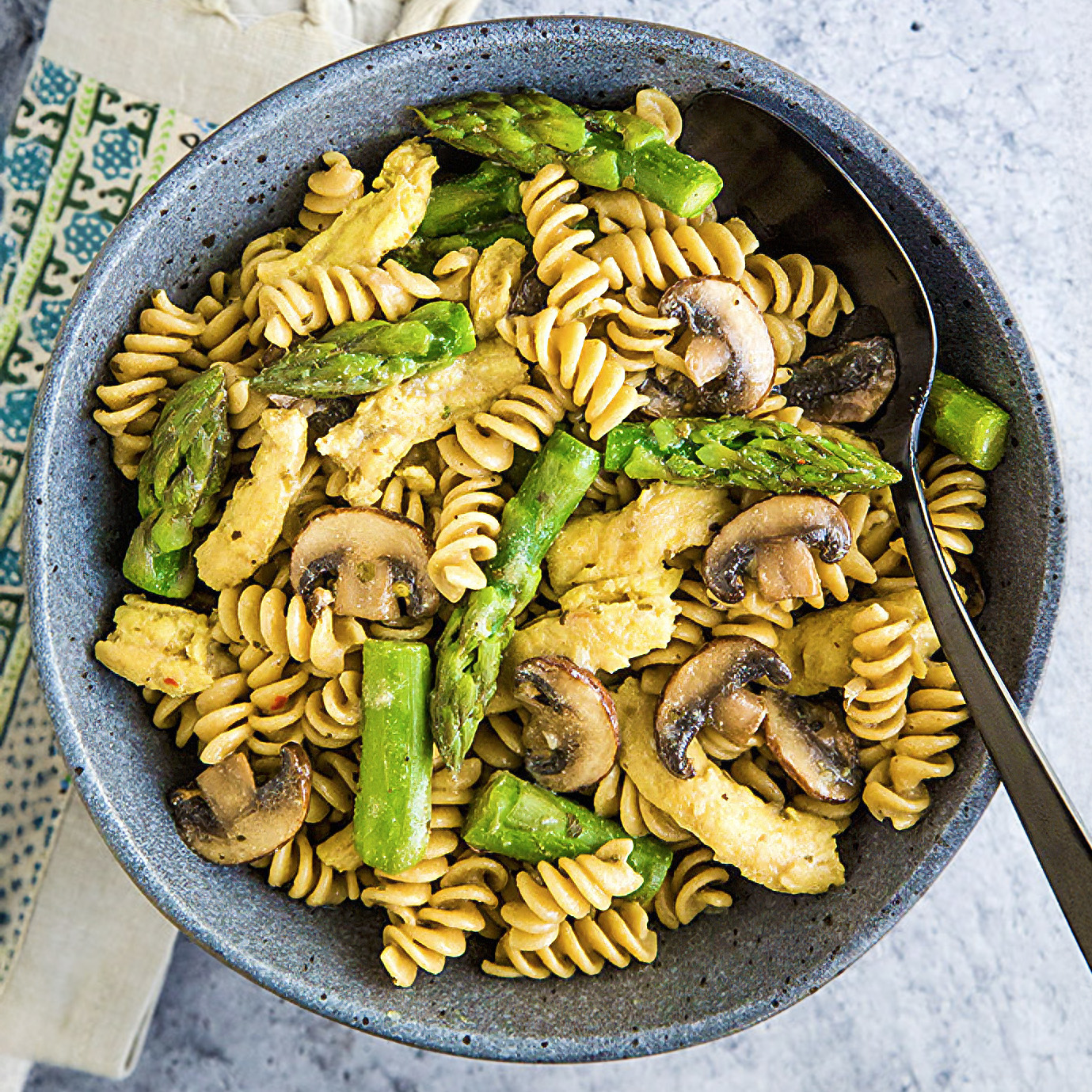
A Delicious Vegan Friendly Pasta Dish, Using Fresh New Season English Asparagus & Mushrooms

April 25, 2025 by knobbyplate

A celebration of spring’s finest produce, this vibrant vegan dish pairs tender new-season English asparagus with earthy mushrooms and perfectly cooked vegan pasta for a simple yet stunning meal. It’s the kind of dinner that feels indulgent but is packed with goodness — light, fresh, and deeply satisfying.

The asparagus, with its delicate crunch and grassy sweetness, is the star here. Harvested at its peak, it brings a bright, green freshness that sings of springtime. Quickly blanched or sautéed, it retains its vivid colour and just the right amount of bite. Complementing it are caramelised button mushrooms, pan-seared until golden and rich with umami, adding depth and warmth to the dish.

The pasta — your choice of wholewheat, lentil, or classic durum wheat — forms a soft, comforting base, catching every drop of the garlic aroma. A pinch of chilli flakes adds a gentle kick.

This dish is as budget-friendly as it is beautiful. Ready in under 25 minutes, it requires just a handful of ingredients and no fancy equipment — ideal for a midweek dinner or a casual weekend lunch. It’s healthy without trying too hard, rich in fibre, vitamins, and plant-based protein, yet feels like a little treat.

A scattering of toasted pine nuts or crushed walnuts adds texture, while a dusting of nutritional yeast or vegan parmesan provides a final savoury flourish. Served warm or at room temperature, perhaps with a glass of chilled white wine or sparkling water with mint, it’s a dish that captures the essence of the season — fresh, green, and full of life.

Save Print
A Delicious Vegan Friendly Pasta Dish, Using Fresh New Season English Asparagus & Mushrooms
Author: Tony Tomlinson
Recipe type: Vegan
Cuisine: British
Prep time:  10 mins
Cook time:  25 mins
Total time:  35 mins
Serves: 4 persons
 
Ingredients
  • 8 ounces pasta rotini preferred
  • 1 bunch English asparagus
  • 8 ounces button mushrooms or field mushrooms sliced
  • 1 teaspoon vegetable stock
  • 

2 teaspoons dried basil
  • 1 teaspoon nutritional yeast
  • 4 garlic cloves, crushed
  • 1 pinch red pepper flake
  • ½ cup soya milk or other unsweetened plant milk
  • 

2 teaspoons cornstarch (or potato starch or arrowroot)
Instructions
  1. Boil the pasta in plenty of salted water according to package instructions. Just before it's done, scoop out and reserve 1½ cup of the pasta water. Drain pasta and return to pan.
  2. While the pasta is cooking, prepare the asparagus by snapping off the ends: Hold the bottom of the spear in one hand and grasp it with the other hand about 2 inches away. Bend the spear and allow it to break. Discard the ends, and then cut the asparagus into pieces about 1½-inch long.
  3. Heat a large covered skillet or Dutch oven over medium heat. Add the asparagus and cook for a minute or two.
  4. Add ¼ cup water and quickly cover. Allow the asparagus to steam for 2 minutes. Uncover and add the mushrooms. Add a splash of water if it seems dry and cover. Cook for about 2 minutes or until mushrooms exude their juices. (If it seems too dry, add a splash of water.) Uncover,
  5. add the garlic, and cook for a minute or two.
  6. Add the vegetables to the pasta and combine well. Keep warm on the lowest heat setting.
  7. Put 1 cup of the pasta water into a small saucepan. Place it over medium high heat and add the stock, basil, nutritional yeast, crushed garlic, and red pepper. As it comes to a boil, whisk together the plant milk and starch in a small bowl and add it to the saucepan. Cook, stirring, until it boils and thickens slightly. Pour it over the pasta and vegetables, and stir to coat. If it seems dry, add a little of the remaining pasta water.
  8. Check the seasonings and add salt and black pepper to taste.
3.5.3251


Filed Under: Asparagus, Main Course, Mushrooms, pasta, Uncategorized, vegan, Vegetables, vegetarian Tagged With: asparagus, cheap, healthy, nutritional, vegan, vegetarian

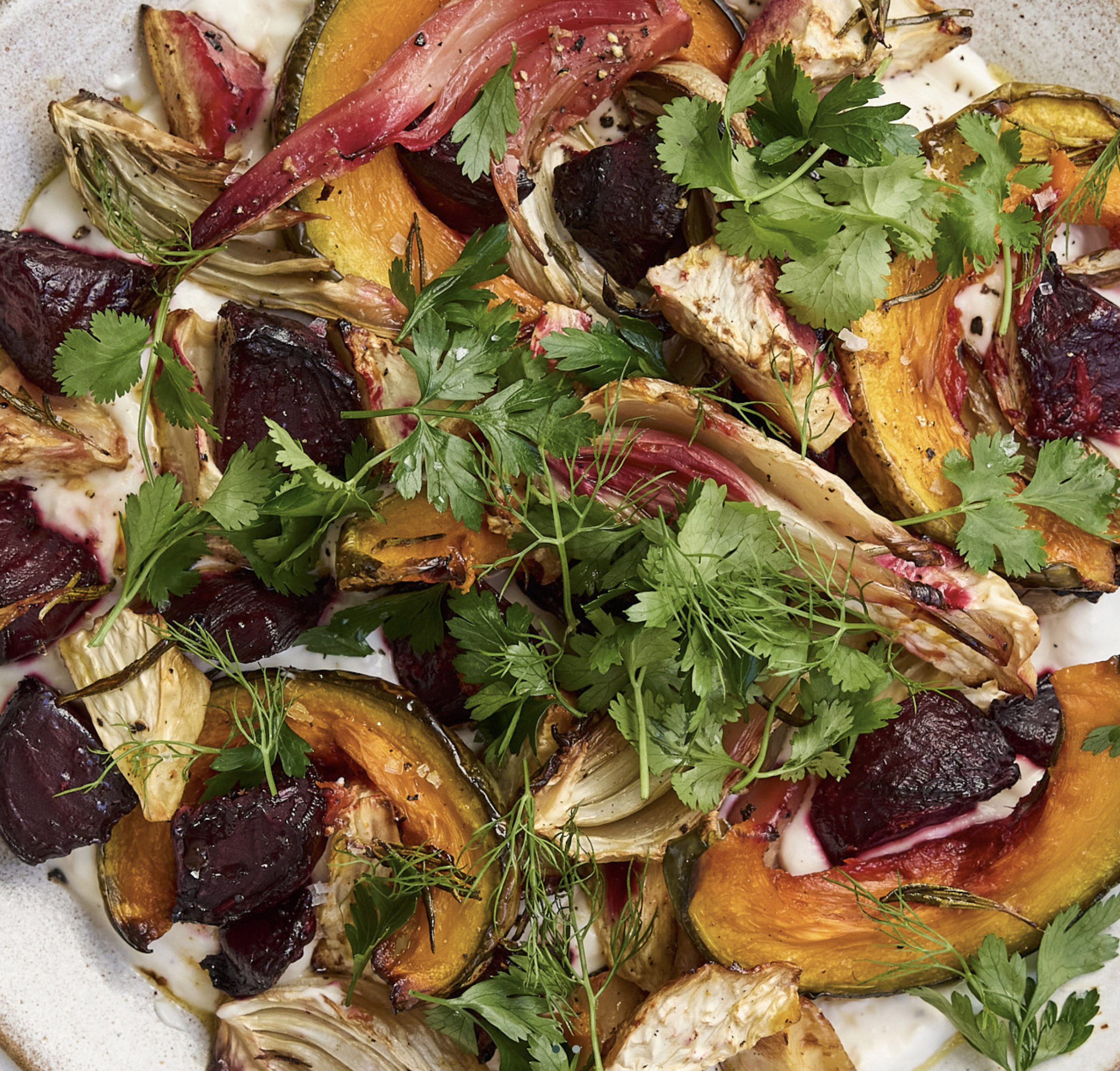
Winter Root Vegetables with Preserved Lemon Yoghurt

December 14, 2024 by knobbyplate


This comforting winter dish celebrates the humble root vegetables of the season, bringing together their earthy sweetness with a tangy, creamy preserved lemon yoghurt for a perfect balance of flavors.

A medley of roasted root vegetables—carrots, parsnips, turnips, and golden beets—are the stars of this dish. Tossed in olive oil, smoked paprika, and thyme, they’re roasted until caramelized and tender. Their natural sweetness is intensified, complemented by a subtle smokiness and herbaceous aroma.

To add layers of texture, crispy chickpeas seasoned with cumin and coriander are scattered across the dish. These add a delightful crunch, alongside toasted seeds—like pumpkin and sesame—that lend nutty undertones.

The preserved lemon yoghurt ties it all together. Made with a plant-based yoghurt, the preserved lemons add a unique punch of salty, citrusy brightness that cuts through the richness of the roasted vegetables. To prepare, finely chop the preserved lemon and stir it into creamy vegan yoghurt with a touch of garlic, fresh dill, and a drizzle of olive oil.

Serve this dish warm, garnished with a sprinkling of fresh parsley or mint for color and freshness. Pair it with crusty sourdough bread or a grain like quinoa to turn it into a hearty meal.

Perfect for chilly evenings, this dish is not just filling but also nourishing. The combination of warm, roasted flavors with the vibrant zing of the preserved lemon yoghurt creates a delightful contrast, making it a memorable addition to any winter menu.

Save Print
Winter Root Vegetables with Preserved Lemon Yoghurt
Author: Tony Tomlinson
Recipe type: Vegan
Cuisine: British
Prep time:  10 mins
Cook time:  55 mins
Total time:  1 hour 5 mins
Serves: 4 persons
 
Ingredients
  • 1 pumpkin or squash
(about 800g / 1 ¾ lb) cut into 2cm wedges
  • 3 beetroot
(about 400g) peeled & quartered
  • ½ celeriac
(about 400g / 14 oz) peeled & cut into 2cm chunks
  • 2 fennel bulbs
cut lengthways into eighths & fronds reserved
  • 2 sprigs rosemary
leaves picked
  • 2 tablespoons olive oil
  • large handful of soft herbs
(about 50g / 1.8 oz) roughly chopped (coriander & parsley work well)
  • pinch of flaky sea salt & black pepper
  • FOR THE PRESERVED LEMON YOGHURT
  • 1 tub coconut yoghurt
(about 250g / 9 oz)
  • 1 bulb garlic
  • 1 preserved lemon
seeds removed & finely chopped

Instructions
  1. Preheat the oven to 180°C fan / 390°F. Place the squash, beetroot, celeriac, fennel and rosemary on a large baking tray. Drizzle with olive oil and season generously.
  2. Slice off the top of the garlic bulb, wrap tightly in foil and pop it in the corner of the tray.
  3. Pace the tray in the oven and cook for 45–50 minutes until tender and deeply golden.
  4. Remove the garlic and mix together with the yoghurt, preserved lemon, a pinch of salt and plenty of black pepper. Transfer to a serving platter and spread out in a large circle
  5. To serve, pile the roasted veg on top of the yoghurt, along with any oil from the tray (this will be full of flavour). Scatter over the herbs and add a pinch of sea salt flakes.
3.5.3251


Filed Under: Main Course, Uncategorized, vegan, Vegetables, vegetarian Tagged With: healthy, healthy eating, main course, preserved lemons, vegan, vegetarian, winter root vegetables, yoghurt

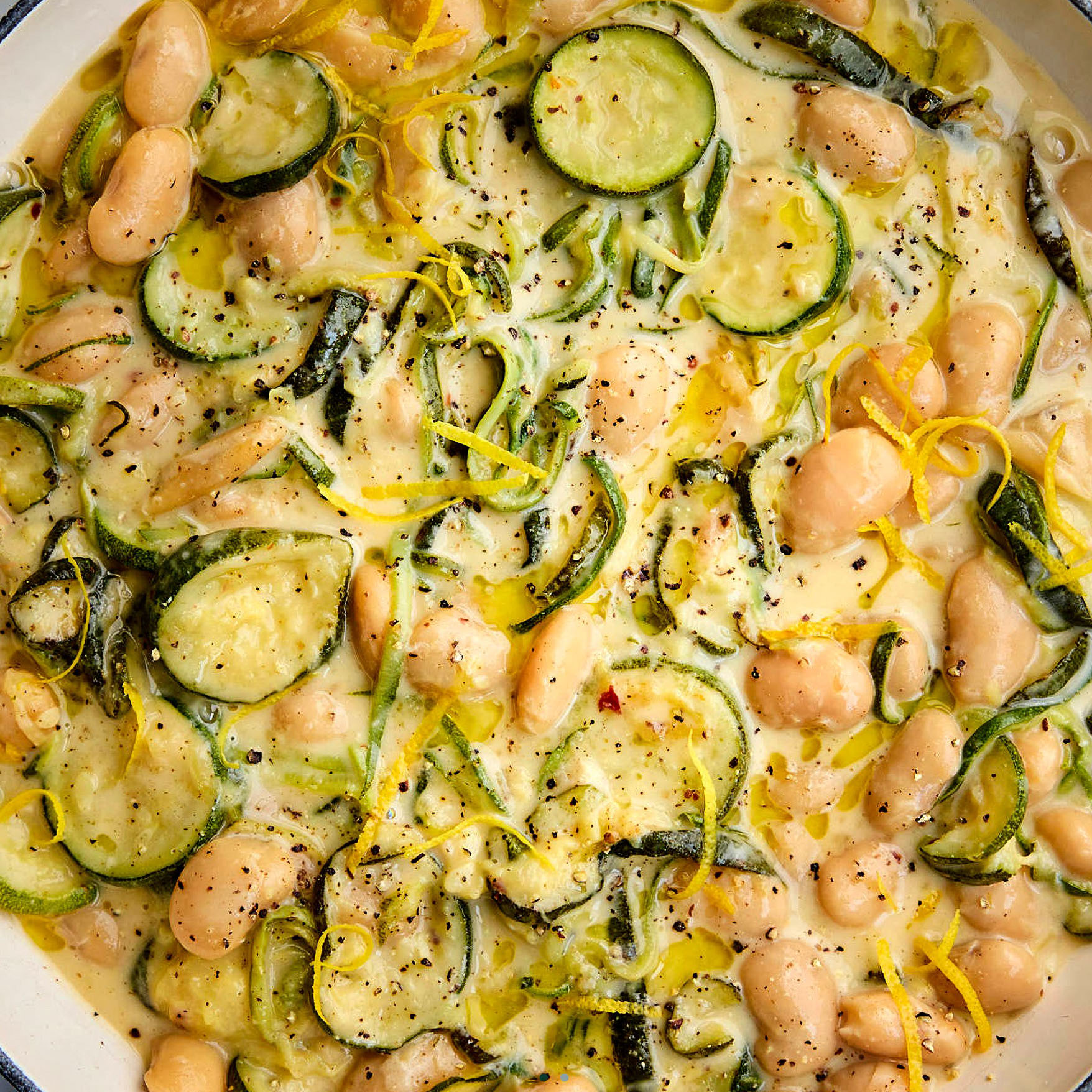
Slow Cooked Courgettes and Creamy Butterbeans

December 13, 2024 by knobbyplate

A humble bowl of comfort, creamy butterbeans meet tender courgettes in a dish that whispers of simplicity and warmth. The butterbeans, their texture soft yet satisfyingly robust, carry a richness that only slow simmering can draw out. They are infused with hints of garlic and a drizzle of olive oil, lending depth to their naturally nutty flavor.The courgettes, sliced thin and cooked until just tender, bring a delicate sweetness to the plate. Their vibrant green is a fresh contrast to the pale cream of the beans, a visual promise of the balance within. A gentle sauté allows them to hold their form, their flavor enhanced with a sprinkle of sea salt and a crack of black pepper.Together, the butterbeans and courgettes are bathed in a light, velvety broth, made from vegetable stock and a touch of cream. The liquid ties the elements together, coating each morsel with a silken finish that begs to be scooped up with crusty bread.A scattering of fresh thyme leaves or a grating of lemon zest adds a fragrant brightness to this homely dish, elevating it just enough while staying true to its essence: simple, wholesome, and utterly satisfying.


Save Print
Slow Cooked Courgettes and Creamy Butterbeans
Author: Tony Tomlinson
Recipe type: Vegan
Cuisine: British
Prep time:  10 mins
Cook time:  1 hour
Total time:  1 hour 10 mins
Serves: 2 persons
 
Ingredients
  • 6 tablespoons olive oil
  • 4 cloves garlic
  • thinly sliced
  • pinch of dried red chilli flakes
  • (optional)
  • 3 courgettes
  • (about 800g / 28 oz ) 2 thinly sliced, 1 julienned/coarsely grated
  • 2 handfuls of pine nuts
  • (about 100g / 3.5 oz)
  • handful of basil
  • (about 30g / 1 oz)
  • handful of parsley
  • (about 15g / 0.5 oz)
  • 1 x 400g tin butter beans
  • (+ the liquid from the tin)
  • 1 vegetable stock cube
  • 2 tablespoons coconut yoghurt
  • 1 lemon
  • zested
Instructions
  1. Warm 2 tablespoons of olive oil in a large frying pan or shallow casserole dish set over medium heat; add the garlic and chilli flakes (if using), cook for 3–4 minutes until just golden.
  2. Add the sliced courgettes and a generous pinch of salt; cook for 20–25 minutes, stirring every so often, until tender and golden.
  3. Meanwhile, warm a small frying pan over low heat, add the pine nuts and cook for 6–8 minutes until golden. Pour into a mini-chopper, along with the basil, parsley and a pinch of salt. Blitz briefly to create a coarse paste; stir in the remaining 4 tablespoons of olive oil and set aside.
  4. Once the courgettes are cooked, increase the heat, then add the butter beans (along with the liquid from the tin) and crumble in the stock cube. Using kitchen paper, squeeze out any excess water from the grated courgette and stir the courgette into the pan; cook for 5 minutes until softened and most of the liquid has bubbled away.
  5. Remove the pan from the heat; stir in the coconut yoghurt, lemon zest and season generously. Spoon the pesto over the top and pour any leftovers into a small bowl to serve on the side. Delicious with fresh bread or warm toast.
3.5.3251


Filed Under: Main Course, pulses, Uncategorized, vegan, Vegetables, vegetarian Tagged With: butterbeans, courgettes, creamy, heartwarming, vegan, vegan bowl, vegetarian

Sautéed Sea Beets

April 12, 2024 by knobbyplate

Well the foraging season is well and truly underway. This is Sea Beet. It grows all along the foreshore here and is a great alternative to spinach. There is one thing you have to bear in mind though. Don’t pick from the edges because that’s where all the dogs on walks wee! so move further in and pick from the centre. After all who wants to eat foraged vegetables doused in dog wee.

An ancient plant, sea beet is the wild ancestor of common vegetables like beetroots and Swiss chard. With its spinach-like flavor, it’s a great green to grow if you like the taste of chard but find yourself tossing out the stems.

While I know not everyone can just walk down the beach and pick a batch of sea beets, but if you can, you definitely should…or if you have a garden, you could try planting them. The crispy shallots are something everyone should know how to pair with greens because they’re so simple and so satisfying.


Save Print
Sautéed Sea Beets
Author: Tony Tomlinson
Recipe type: Foraged
Cuisine: British
Prep time:  5 mins
Cook time:  3 mins
Total time:  8 mins
 
Ingredients
  • 1 lb. (500 g.) sea beets or other leafy greens
  • 2 Tbs. (30 ml.) olive oil, plus more for drizzling
  • 4 shallots, thinly sliced into crescents or rings
  • salt, pepper
Instructions
  1. TRIM any tough stems from the greens and rinse well in lots of cold water while bringing a large pot of water to a rolling boil.
  2. PLUNGE the greens in the boiling water. When the water returns to a rolling boil, drain the greens, and gently squeeze out any excess water when cool.
  3. TO MAKE THE CRISPY SHALLOTS: Heat the olive oil in a medium skillet over medium-high heat. Add the shallots, and sauté 4 to 5 minutes, or until the shallots are deep golden brown. (They will crisp as they cool.) Transfer to a paper-towel-lined plate to drain, and sprinkle with salt.
  4. ADD the greens to the remaining oil in the skillet, and cook 2 to 3 minutes, turning with tongs, or until the leaves turn a darker brown and are coated in oil. Serve sprinkled with the crispy shallots.
3.5.3251


Filed Under: Uncategorized

MULBERRY & BLACKBERRY JAM

August 16, 2017 by knobbyplate

So we have finally had a dry couple of days with sunshine thrown in for good measure. Perfect for picking mulberries and blackberries to make a fresh batch of jam.

Mulberries are so rare round here that I keep my foraged secret to myself each year in the hope that I get first pick of the new years crop and with all the early years sunshine and recent rain it has ensured a particularly plump season for these delicious berries.

The health benefits of berries is well documented.

  • Delicious, fleshy, succulent mulberries are less in calories (just 43 calories per 100 g). They compose of health-promoting phytonutrient compounds like polyphenol pigment antioxidants, minerals, and vitamins that are essential for optimum health.
  • Mulberries have significantly high amounts of phenolic flavonoid phytochemicals called anthocyanins. Scientific studies have shown that consumption of berries has potential health effects against cancer, aging and neurological diseases, inflammation, diabetes, and bacterial infections.
  • The berries contain resveratrol, another polyphenol flavonoid antioxidant. Resveratrol protects against stroke risk by altering molecular mechanisms in the blood vessels; reducing their susceptibility to damage through reduced activity of angiotensin (a systemic hormone causing blood vessel constriction that would elevate blood pressure) but potentiating production of the vasodilator hormone, nitric oxide.
  • Also, these berries are excellent sources of vitamin-C (36.4 mg per 100, about 61% of RDI), which is also a powerful natural antioxidant. Consumption of foods rich in vitamin-C helps the body develop resistance against infectious agents, counter inflammation and scavenge harmful free radicals.
  • Further, the berries also contain small amounts of vitamin-A, and vitamin-E in addition to the antioxidants mentioned above. Consumption of mulberry provides another group of health promoting flavonoid poly phenolic antioxidants such as lutein, zeaxanthin, ß-carotene and a-carotene in small but notably significant amounts. Altogether, these compounds help act as protect from harmful effects of oxygen-derived free radicals and reactive oxygen species (ROS) that play a role in aging and various disease processes.

The health benefits of blackberries are equally impressive.

Just one cup of raw blackberries has 30.2 milligrams of vitamin C. That’s half the daily recommended value. Vitamin C is integral to collagen formation in bones, connective tissue, and blood vessels. Vitamin C may also help you:

  • heal wounds
  • regenerate the skin
  • battle free radicals (molecules released by toxins) in the body
  • absorb iron
  • shorten the common cold
  • prevent scurvy

More research is needed, but some studies suggest vitamin C helps reduce the formation of cancer-causing substances in the body. Vitamin C acts as an antioxidant which may also reduce oxidative stress in the body that can lead to cancer.


Save Print
MULBERRY & BLACKBERRY JAM
Author: The Knobbly Plate
Recipe type: foraged
Cuisine: British
Prep time:  10 mins
Cook time:  30 mins
Total time:  40 mins
Serves: 4 Pots
 
Ingredients
  • 1kg mulberries
  • 0.75kg blackberries
  • 2kg caster sugar
  • 3 tablespoons powdered pectin
  • 1 tablespoon unsalted butter
Instructions
  1. Place the mulberries and blackberries into a large, heavy saucepan and crush them with a potato masher.
  2. Add the sugar and pectin and heat very slowly, stirring all the time until every grain of sugar has dissolved. Add the butter, increase the heat, bring to a full rolling boil and boil for exactly 4 minutes. Remove from the heat, cool for 1 minute, then place in jam jars and cover immediately.
3.5.3226


Filed Under: Foraged Tagged With: blackberry, foraged, jam, mulberry

ROMESCO & CAULIFLOWER CHEESE

August 2, 2017 by knobbyplate

Following on from my post about this glorious vegetable romesco. Here is a funky alternative to plain old cauliflower cheese. My Romesco & Cauliflower Cheese.

Well the weather has taken a turn for the worst today with nought but torrential rain and a cold wind. Not really summer weather so here is a comfort dish to keep you warm and cosy on these abnormal summer days. I must say though the ground does need the rain as it has been so dry for so long now. I love the vibrant green that the romesco brings to the dish and if you are wondering what it tastes like well it’s a cross between broccoli and cauliflower.


Save Print
ROMESCO & CAULIFLOWER CHEESE
Author: The Knobbly Plate
Recipe type: main course
Cuisine: British
Prep time:  20 mins
Cook time:  40 mins
Total time:  1 hour
Serves: 4 Persons
 
Ingredients
  • 1 romanesco cauliflower
  • 1 cauliflower
  • 2 tbsp butter, at room temperature
  • 2 tbsp plain flour
  • 500ml whole milk
  • A 100g chunk of Cheddar
  • 2 stale slices of bread
  • A pinch of mixed spice or chilli powder
  • 1 tbsp balsamic vinegar
  • Sea salt and freshly ground pepper
  • ½ tbsp olive oil
  • 2 large handfuls of watercress
Instructions
  1. Pull the leaves off both the cauliflowers. Chop them into florets. Pop the cauliflower florets in a steamer basket or colander.
  2. Pour boiling water into a steamer or pan. Pop the basket or colander above the hot water. Cover. Steam for 15-20 mins till the cauliflower is tender. Drain and tip into an ovenproof dish. Heat your oven to 180°C/Fan 160°C/Gas 4.
  3. Mash the butter and flour together with a fork. Pour 500ml milk into a pan. Bring to the boil. Stir the milk now and then to stop it burning. Take off the heat. Slowly whisk in the flour mixture, a little at a time, till it’s all combined and smooth.
  4. Put the pan back on the heat. Bring to the boil. Whisk and simmer for 2 mins till the sauce is thick. Take off the heat.
  5. Coarsely grate the Cheddar. Stir two-thirds of it into the sauce. Season with salt and pepper. Pour over the cauliflowers.
  6. Blitz or grate the stale bread till you have a 25g batch of breadcrumbs. Mix the breadcrumbs with a pinch of mixed spice or cayenne pepper and the remaining cheese. Sprinkle over the top of the cauliflower. Bake for 20 mins till golden and bubbling.
  7. While the cauliflower cheese bakes, whisk the balsamic vinegar with ½ tbsp olive oil and a little salt and pepper.
  8. Rinse the watercress. Pat dry with kitchen paper. Pop into a bowl. Add the balsamic dressing. Toss to mix. Serve the salad with the cauliflower cheese.
3.5.3226


Filed Under: Main Course Tagged With: cauliflower, cheese, comforting, cosy, hearty, romesco

QUICK ROASTED CAULIFLOWER CHEESE

July 27, 2017 by knobbyplate

In the second of my articles on “Everyday & Sunday” I am going to look at that perennial favourite, cauliflower cheese. For some reason since time began there always seems to be a version of cauliflower cheese in every vegetarian based cookbook. I should point out though that Everyday and Sunday is not strictly a veggie cookbook but it does contain mostly vegetarian dishes.


So what did we here at Knobbly Plate like about this recipe. Well first of all it definitely fits in with the affordable bit. The whole dish cost just £6.32 to make and there was easily enough for 4 people. That’s just £1.58 a portion for this classic comfort food. The most expensive ingredient was the gruyere cheese at £2.87 so it’s possible to make the dish even cheaper by substituting that for a mild cheddar which would probably halve the cost of the cheese.

The dish was simple enough to prepare but we found that the roasting part of ths cauliflower took double the amount of time it said on the recipe. Next and this is a personal preference I like my mustard so I doubled the amount to give it a bit more zing.
Taking all this into account it was a passable version of cauliflower cheese. I think however the one big change I would make in future would be to par boil the cauliflower first as we found the roasted version just a tad chewy. I would however say that if you have had a long day at work and can’t really face cooking then this version is definitely quick and easy to get from cupboard to plate.

Save Print
QUICK ROASTED CAULIFLOWER CHEESE
Author: The Knobbly Plate
Recipe type: Main Course
Cuisine: british
Prep time:  5 mins
Cook time:  40 mins
Total time:  45 mins
Serves: 4 Persons
 
Ingredients
  • 1 Cauliflower, Cut Into Florets
  • 1 tbs Olive Oil
  • 1 tsp Caster Sugar
  • 250g Creme Fraiche
  • 1 tsp Dijon Mustard
  • 100g Gruyere Cheese
Instructions
  1. Toss the cauliflower in the oil and sugar and roast for 20 mins at gas mark 6
  2. Mix all the other ingredients into a bowl with the grated gruyere.
  3. Toss the roasted cauliflower in the mixture.
  4. Place in an oven proof dish and scatter some grated gruyere over the top and roast in a hot oven until golden and bubbling.
3.5.3226


Filed Under: Main Course Tagged With: baked, british, cauliflower, cheese

Next Page »

Primary Sidebar

About Me

I grew up in Scotland where I learned to forage as a child with my parents for berries on the local moors. I have had a love of all things vegetarian for many many years and this blog will reflect my daily affordable healthy daily diet. As well as being a keen cook I am also a passionate photographer so all the images on this site have been photographed by me. I also intend to use this blog to recommend my favorite cook books to you.

Social Media

  • Instagram

Recipe & Blog Archive

  • February 2026 (1)
  • November 2025 (1)
  • June 2025 (3)
  • May 2025 (3)
  • April 2025 (7)
  • December 2024 (3)
  • October 2024 (1)
  • August 2024 (3)
  • July 2024 (1)
  • May 2024 (2)
  • April 2024 (3)
  • February 2024 (8)
  • January 2024 (4)
  • September 2017 (1)
  • August 2017 (9)
  • July 2017 (13)

Tag Cloud

affordable asparagus baby leaf salad beans beetroot blackberry bread brocolli carrots cauliflower cheap cheese comforting cookbooks cous cous focaccia foraged free food garlic goats cheese healthy healthy eating italian lemons main course market stall middle eastern mushrooms nettles pasta pesto rosemary salad samphire seasonal spinach springtime summer vegan vegan bowl vegetarian veggie wild garlic wild mushrooms woodland

Blogpost Dates

June 2026
M T W T F S S
1234567
891011121314
15161718192021
22232425262728
2930  
« Feb    

Featured Ingredients

ASPARAGUS

Copyright © 2026 · Foodie Pro & The Genesis Framework

Manage Consent
To provide the best experiences, we use technologies like cookies to store and/or access device information. Consenting to these technologies will allow us to process data such as browsing behavior or unique IDs on this site. Not consenting or withdrawing consent, may adversely affect certain features and functions.
Functional Always active
The technical storage or access is strictly necessary for the legitimate purpose of enabling the use of a specific service explicitly requested by the subscriber or user, or for the sole purpose of carrying out the transmission of a communication over an electronic communications network.
Preferences
The technical storage or access is necessary for the legitimate purpose of storing preferences that are not requested by the subscriber or user.
Statistics
The technical storage or access that is used exclusively for statistical purposes. The technical storage or access that is used exclusively for anonymous statistical purposes. Without a subpoena, voluntary compliance on the part of your Internet Service Provider, or additional records from a third party, information stored or retrieved for this purpose alone cannot usually be used to identify you.
Marketing
The technical storage or access is required to create user profiles to send advertising, or to track the user on a website or across several websites for similar marketing purposes.
  • Manage options
  • Manage services
  • Manage {vendor_count} vendors
  • Read more about these purposes
View preferences
  • {title}
  • {title}
  • {title}